Spiritual Disciplines and Legalism

This month we start up our small discipleship groups at my church.  One of the things we emphasize and hold group members accountable to is their commitment to spiritual disciplines like consistent time in God’s Word, prayer, and Scripture memorization.  Also, this year I have been putting a monthly challenge before my church to commit one day a month to the discipline of fasting and prayer.  The question has been posed to me both in person and through some recent reading as to whether doing spiritual disciplines is a kind of legalism.  It is a legitimate question, but I also find it to be a convenient excuse.

Of course doing spiritual disciplines can become legalistic.  Any “spiritual” activity can become that.  Legalism believes I can win God’s approval and gain standing with Him by what I do. Sometimes it is rooted in pride (think Pharisees). Sometimes it is rooted in the mistaken idea that my behavior earns me standing with God.  Anything I do out of a sense of acquiring standing with God is legalism because that is contradictory to grace.  Grace is entirely premised on God dealing with me in ways I absolutely do not deserve and could never earn.

If I do the spiritual disciplines thinking God or others will be impressed with my spirituality, I’m being legalistic. If I do the spiritual disciplines simply so I won’t feel guilty for not doing the disciplines, I’m being legalistic because my guilt exposes my belief that behavior wins merit or demerit with God.   It may be true that it impacts what others think of me, but if I do the disciplines in order to shape people’s opinions of me, well then, I’m being a hypocrite.

The problem is not the spiritual disciplines, nor disciplining myself to do them.  The problem resides in my heart because that’s where legalism is conceived.  If the guys in my discipleship group do the spiritual disciplines simply to make me happy or to keep the other guys from getting on their case, they are missing the point and are caught in either legalism or hypocrisy, or both.

I get the impression that those who deemphasize spiritual disciplines and opt for a more random “as the Spirit leads” approach, think that theirs is a more “authentic” spirituality.  I don’t agree.  Rather than promoting a greater authenticity, randomness actually results in a greater vulnerability because there is a battle raging in my heart every single day of my life (Gal. 5:16-17).  Randomness is not the solution because as a believer, I have two contrary passions battling for control of my heart: the flesh and the Spirit.  The flesh hates discipline and wants what it wants when it wants it.  The Spirit, on the other hand, wants the things of the Lord and is working to fill the believer up with all the fullness of Christ.  The chief obstacle to that taking place is my flesh, which makes it all the more significant that one part of the fruit of the Spirit is self-control (Gal. 5:23).

The flesh, if left undisciplined, will run wild.  Disciplining the flesh is not legalism, unless we mistakenly think that disciplining the flesh impresses God and makes us more righteous.  Not disciplining the flesh quenches the work of the Holy Spirit and giving into the flesh grieves the Spirit, both of which impede spiritual growth.  So, it is not legalism to put disciplines in place that will help me discipline my flesh. For example:

  • I schedule a time to spend with the Lord and set an alarm to help me get up early enough in the morning to have that time because I know I need it, and if I don’t do it in the morning, it won’t happen that day.  Getting up in the morning doesn’t make me godly, but it does create the time I need to be alone in the presence of God.  Scheduling time for the disciplines and then keeping to the schedule doesn’t automatically make them rituals.  What makes them rituals is doing them only to do be able to say I did them.
  • Disciplining myself to fast does not make me godly.  But passing up a meal or fasting from some pleasure in order to pursue God affords me an opportunity to say no to the flesh and yes to the Spirit.

If my flesh is to be subdued, I must discipline myself to that end (1 Cor. 9:24-27).  One of the functions of the body of Christ is to “stir each other up” to spiritual ends (Heb. 10:24).  That sounds like accountability to me.

Apart from disciplining myself to engage with God personally through the means He has provided, I cannot nurture my relationship with Him.  If I was free from the flesh, discipline would not be needed for spiritual pursuits would be automatic.  But I’m not and therefore I need to discipline myself to engage in that which I need to do.  God wants my attention and time, regular time, quiet time, to minister to my soul, for me to hear Him and respond to Him.  Because my flesh wants none of it, and my randomness will generally yield to the flesh’s influence, I remain committed to spiritual disciplines.
Posted in Discipleship, Uncategorized | Tagged , , , , , , | Leave a comment

The Pastor’s Role Model, pt. 2

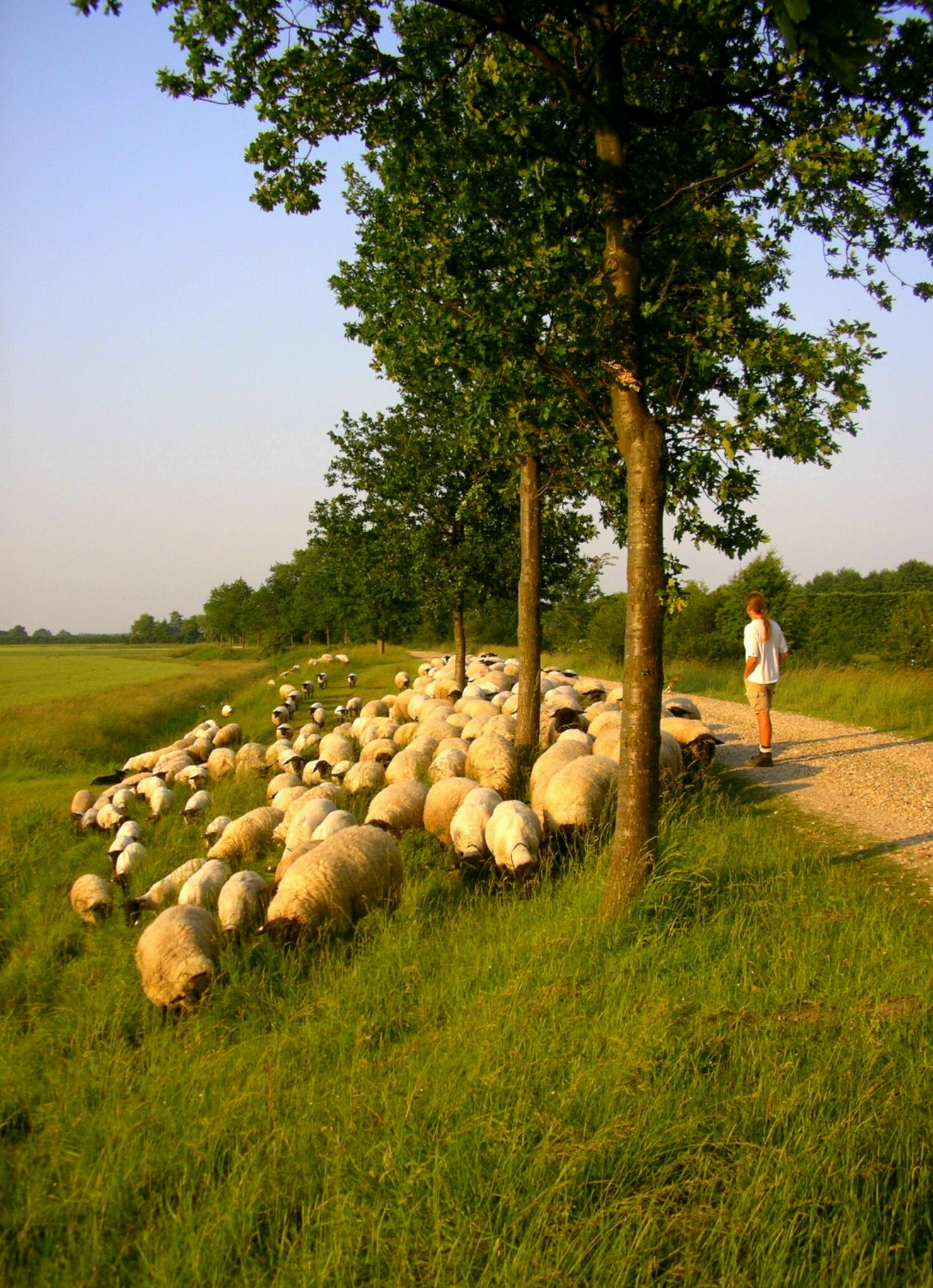
The pastor’s job is shepherding, thus the shepherd is his role model.  His job is not political, vying to win votes.  Though he is responsible to intercede for the people under his care and help them come before their God, the pastor is not the priest of the congregation.  Though he is to faithfully expound God’s Word, the pastor is not a professor in the classroom (which is why I do no call the congregation to whom I am preaching “class”).  Though it is necessary for him to lead people, the business executive is not his role model.  And though there is a prophetic role to be carried out from the pulpit, the prophet still is not the pastor’s chief role model.  He is a shepherd who has been ordained to the work of tending the flock assigned to him by the Chief Shepherd, Jesus Christ.  That’s his work.  That’s his job.  That’s his divine calling.  It is tempting in American evangelical culture for pastors to not do pastoral work.

Shepherding isn’t as glamorous as those other models.  In fact, it is rather lowly and insignifcant compared to politicians, priests, professors, executives, and prophets.  The religious elite of Jesus’ day classified shepherds as thieves and they were not given full civil rights in the Jewish community.  But this is God’s chosen role model.  It is not surprising that God’s pattern for leadership would not be copied from the world’s models.

The model is a long-standing one within God’s covenantal communities of Israel and the Church.  The leaders of Israel were referred to as shepherds (2 Sam. 5:2; 7:7; Psa. 78:70-72; Jer. 12:10; 23:2; 50:6; Ezek. 34), and in the New Testament the leaders are identified by three terms: elder, overseer, and sheperd (Ac. 20:17 and 28; 1 Pe. 5:1-3).

There are practical implications to the shepherd being the pastor’s role model.

  1. It speaks to me as to how the pastor does his work.  While he must do it with firmness, watchfulness, and courage, tenderness is a vital quality of a shepherd.  That doesn’t mean he is never stern, but in it he is gentle.  Pastoring isn’t about being enthroned in the church and having the members fulfill the pastor’s every whim.  While Hebrews 13:17 instructs a congregation to “obey” its leaders, it goes on the explain that the reason they are to obey is because they are “watching for your souls.”  That sounds like shepherding to me.  The pastor is not the boss of the church.  He is the shepherd of a flock that needs to be led, fed, protected, and cared for.
  2. It reminds me that the pastor’s job isn’t to build the church but to tend the sheep.  Christ will build His Church (Mt. 16:18) and the church will build itself up in love if each member does his part, including the pastor (Eph. 4:16).  It is tempting to buy into popular models of church growth that revolve around styles, schedules, and cutting-edge programs.  If Christ is building His Church, and if the church will build itself up, then a pastor’s time is better invested in caring for the souls of the sheep than trying to run the church.
  3. It directs me to the Psalms as a relevant manual for doing pastoral work.  Reading Eugene Peterson has awakened me to this.  He affirms that pastoral work is not about running the church, but curing souls.  Curing souls involves using language that speaks to the heart.  “The pastoral task,” Peterson writes, “is to use the language most appropriate to the basic aspect of our humanity – not language that describes [the teacher in the classroom], not language that motivates [the politician in front of a crowd], but spontaneous language: cries and exclamations, confessions and appreciations, words the heart speaks.”  A pastor needs to be proficient in more languages than Greek and Hebrew.  He needs to learn soul-language which, Peterson asserts, is the language of the Psalms.  Pastors can be good at speaking the language of description or the language of motivation.  But pastors need to become really good at speaking the “language of intimacy, the language that develops relationships of trust and hope and understanding,” in Peterson’s words, for what we are ultimately after as shepherds of the flock isn’t to dish out more information, isn’t to get the sheep to do more things, but rather to speak the language of their souls in order to nurture their relationship with God.

I’ve heard pastoral work described in terms of putting on and taking off a variety of hats: leader, preacher, counselor, adminstrator, strategic planner, and trainer.  But all of that is bound up in one role, the role of shepherd.  Any of those jobs can be done apart from a shepherding approach, to the detriment of the church.  I like the words of 1 Peter 5:2-5,

Shepherd the flock of God that is among you, exercising oversight, not under compulsion, but willingly, as God would have you; not for shameful gain, but eagerly; not domineering over those in your charge, but being examples to the flock. And when the chief Shepherd appears, you will receive the unfading crown of glory. Likewise, you who are younger, be subject to the elders. Clothe yourselves, all of you, with humility toward one another, for “God opposes the proud but gives grace to the humble.”

Posted in Uncategorized | Tagged , , , , , | Leave a comment

The Pastor’s Role Model, pt. 1

A role model is someone who serves as an example, whose behavior is worthy of emulation.  Who should the pastor look to in order to find a pattern for his work?  Who is it that provides the best paradigm for pastoral ministry?  Here are some suggestions based on what I have read, heard, and seen.

1.  The Politician In America politics and religion are inseparable, thus the politicians take cues from the clergy and the clergy from the politicians.  This model emphasizes the art of persuasion and it has in focus the aim of controlling the church’s agenda or climbing the denominational ladder.  “If I want to get to that position in this denomination then this is the kind of pastor I must be,” is sort of the mindset.  It is a model that leads to fan clubs (see 1 Cor. 3:1-6).  If the politician is the pastor’s role model then his playbook is the church’s constitution and the denomination’s platform or by-laws.  The politician is not the pastor’s role model.

2.  The Priest.  The priest is the guy who is sanctioned to do the religious rituals for the church.  In the OT it was the priests who administered the sacrifices of Israel, and as such, functioned as mediators between Israel and God.  This is the model for denominations who call their pastors “priests,” a title I’ve been given by people outside my church on more than one occasion.  The New Testament soundly rejects a “priestly caste” in the Christian church.  There is one Mediator between man and God and that is Jesus Christ (1 Tim. 2:5) and as such all who are in Christ become priests (1 Pe. 2:4-10).  While the pastor certainly is to intercede before God for the congregation through prayer, he does not serve as their mediator to God.  If the priest is the pastor’s role model, then the liturgical manuals are his playbook.  But the priest is not the pastor’s role model.

3.  The Professor.  The professor is well educated.  According to this model he needs a bachelor’s degree, a master’s degree, and maybe even a doctorate.  If he doesn’t have all the degrees, he is at least bookish.  He knows His Bible and theology, Greek and Hebrew, history and philosophy and he can stand in front of others and pass along this knowledge, or he can write in such a way as to spread the wealth of what he has come to know.  He produces copious notes for the congregation with every sermon.  There is a crying need for Christian scholarship these days.  Too many are satisfied with surface, shallow understandings of God’s Word and have no interest in delving into its limitless depths.  Pastors a few generations ago were the scholars.  Some of the thick theologies on my bookshelves were written by pastors who were great theologians.  However, as needful as Christian scholarship is, it is not the essence of pastoral work.  If the pastor’s role model is the professor, then his playbook is his theology books and commentaries.  The pastor’s role model is not the professor.

4.  The Chief Executive Officer.  The CEO knows how to influence people.  He knows how to cast vision, set goals, and motivate a group to achieve those goals.  Based on the majority of books being written on pastoral leadership, there is no question but that the CEO is considered a role model for pastors.  While I have learned helpful leadership principles from these books, I am absolutely convinced that pastoral leadership has a different essence to it than CEO leadership.  If the pastor’s role model is the CEO, then his playbook comes from the business schools and boardrooms.  The pastor’s role model is not the CEO.

5.  The Prophet.    The biblical prophet was literally “the mouth of God,” boldly proclaiming, “Thus saith the Lord.”  The history of the Church is a history of great preachers.  I remember when the ideal pastor was a great pulpiteer.  Many hold up the great preachers as the role model for pastors.  By far, the prophet seems to be the most popular role model for pastoral ministry in America in Bible-believing, Bible-preaching churches where the pulpit is the centerpiece of church auditoriums.  I would simply counter by saying that great preachers are models for preaching, but not necessarily for pastoring.  Not every great preacher does pastoral work all that well because preaching is not sufficient to accomplish all that pastoring requires.  As important as preaching is, I don’t believe the prophet is the preeminent role model for pastoral work.

6.  The Shepherd.  This is the role-model for today’s pastor.

I will take that up in my next post.

Posted in Uncategorized | Tagged , , | Leave a comment

The Pastor’s Responsibility

I am currently reading Eugene Peterson’s Working the Angles: the Shape of Pastoral Integrity, one of three books he has written on pastoral work, and some of the best writing on pastoral ministry I have ever read.  In the opening pages of this book he writes these words:

“The biblical fact is that there are no successful churches.  There are, instead, communities of sinners, gathered before God week after week in towns and villages all over the world.  The Holy Spirit gathers them and does his work in them.  In these communities of sinners, one of the sinners is called pastor and given a designated responsibility in the community.  The pastor’s responsibility is to keep the community attentive to God.”

If I was to describe pastoral ministry as I see it played out, I would alter that last sentence to say something like “One of the pastor’s responsibilities is to keep the community attentive to God.” Pastors have lots of things to do like sit in meetings, plan budgets and then preach on giving so those budgets can be reached, cast visions,  strategize new programs, attend to building matters, follow-up on absentees, pray with the sick, comfort the sorrowing, counsel those going through difficulties, prepare lessons and sermons, perform funerals and weddings, plan services, spend time with unsaved people, attend pastors’ meetings, and take up the endless assortment of social, moral, and political causes that seek the pastor’s involvement and support.  Oh, and high on that list, maybe even #1 is keeping the church attentive to God.

But that’s not what Peterson wrote. He said it is the pastor’s responsibility, not one of many responsibilities. In other words, if the pastor doesn’t do this he is derelict in his duty, no matter what else he may do to busy himself or no matter what he may accomplish that looks good.  But if he does do this, he has done his job and fulfilled his calling.

That is it?  Just one thing?  What about preaching, training, and disciple-making?  Here’s the deal: none of those things are ends in themselves.  Keeping a community attentive to God is.  As long as those other things are aimed at the one thing, a pastor is on track   On the one hand the responsibility sounds simple; a one-item job description: “Keep the community attentive to God.” But the reality is that this is a difficult thing to do.

This is difficult because our world is not attentive to God.  At best it ignores Him; at worst it outright rebels against Him.  So these “communities of sinners,” as Peterson calls churches, work and play, laugh and weep, love and hate, and seek to display the grace of God in surroundings that honestly want nothing to do with God and are disinterested in anything He has to say and opposed to anything He seeks to do.  And that world entices all to do the same.

This is difficult because churches are communities of sinners who still struggle to be attentive to God over self.  This self-focus manifests itself as people approach the church with the expectation that it exists to “make much of them” (in the words of John Piper). And so the church becomes consumed with meeting the expectations of self-focused people who want their needs, their likes, and their causes to be attended to, all in the name of God.

This is difficult because pastors themselves can become inattentive to God while being very attentive to the litany of pastoral activities I cited earlier.  When it comes to being attentive to God, pastors suffer their own unique kind of attention deficit disorder.

Therefore, the pastor must not be surprised by sinners being self-focused nor should he constantly chide them for it. The old ways and the flesh are not easily dislodged.  What he cannot do, however, is abandon his one responsibility in the pursuit of satisfying all other expectations.  As real as the battle may be in his own soul, the fact remains that from among the gathered sinners, he has been specifically ordained to keep that community attentive to God. If he abandons his post, nothing but disaster awaits.

Keeping a congregation attentive to God may sound vague, but Peterson goes on to cite
three specific activities the pastor must engage in to accomplish his work, activities that cannot be pushed aside by other pressing demands.

  • First is praying, in which the pastor brings himself to attention before God.
  • Second is reading God’s Word, in which the pastor brings attention to the things that God has said and done over thousands of years in Israel and in Christ.
  • Third is giving spiritual direction, in which the pastor gives attention to what God is doing in the life of the person before him at any given moment.

Activities other than these may be necessary in the church, but they are not pastoral work.

I intend to examine my pastoral work and give every effort to discard or delegate away those things that hinder me from doing the one thing that I must do for the sake of the community of sinners of which I am a part – keep us attentive to God.

Posted in Uncategorized | Tagged , , | Leave a comment

Anyone in Favor of Not Praying?

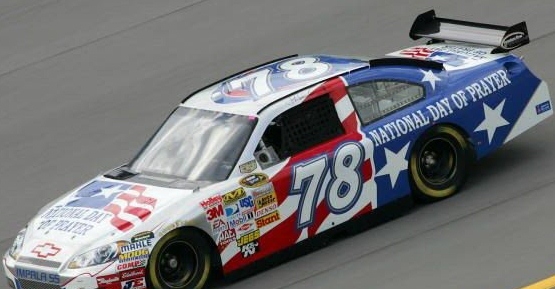
“Preacher Thanks the Lord for Car Parts.”  That headline greeted me this week as I turned on my computer.  Underneath the headline was this tagline:  “Boogity, boogity, this pastor delivers one of the most unusual NASCAR pre-race prayers ever heard, plus makes a racy shout out to his wife.”  Yes, he did as he thanked the Lord for the mighty machines about to race, for the Dodges, Toyotas, Fords, GM technology, Sunoco racing fuel and Goodyear tires.  And then to top it all off, he gave thanks for his “smokin’ hot wife.”  By the time his prayer was done the crowd was laughing.  Defending his prayer later, Pastor Joe Nelms of the Family Baptist Church in Lebanon, Tennessee said he doesn’t want to pray “cookie-cutter” prayers and that he hoped his prayer would get somebody’s attention.  Well, he succeeded in that.  I guess the question is what kind of attention did he want?  Some loved it, and others, like me, did not.  At least he closed his prayer “in Jesus’ name,” which is enough for some Christians to shout “Hallelujah!” for his boldness and take renewed hope that there are still some vestiges of Christianity alive and well in America, at least at the NASCAR track.

This caused me to wonder why a pre-race prayer had to be offered up anyway.  What’s the purpose?  Is it to ask God to protect drivers from harm as they deliberately accelerate their cars to nearly 200 mph and take turns as fast as they can without skidding out of control or slamming into a wall?  Is it for God to bless the crowd who has gathered on Sunday (a day I believe still has spiritual significance in Christian worship) at the raceway to watch these “mighty machines” roar around the track?  Is it a prayer for everyone to have fun, as if that’s high on God’s list of priorities?  If it is a prayer for God’s blessing, just what would a NASCAR blessing from God look like?

You can tell I’m not a big NASCAR fan and I’m not saying there is anything wrong with going to a race.  I’m just wondering what the prayer is about, even if it is offered in Jesus’ name.  Why do we have to drag Jesus to the race?  Is it just part of the “God & Country” gig?  If so, do they serve apple pie afterwards too? I know a lot of people who would be upset and protest if the pre-race prayers were discontinued and cite it as one more evidence of our nation’s Christian decline.  I would just say that if prayers like this at events like this are the measure of Christianity’s health in the USA, things definitely aren’t looking good and pre-race prayers aren’t going to help.

This isn’t about supporting the false dichotomy many want to make between the sacred (i.e., church) and the secular (i.e., racetrack).  It is about musing over the idea that God is not caught up with America’s entertainment addiction, and if I may put it this way, He has far more important things to attend to while we entertain ourselves to death.  I think it wise to not try to validate our entertainment by attaching Jesus to it.

Writing in HuffPost Religion, Shirl James Hoffman made, what I believe to be, an appropriate observation:

“…after witnessing unrelenting ‘religion creep’ in big time sports — the infusion of a Wal-Mart theology shaped largely by the dictates of a money-grubbing sports establishment — I’ve come round to thinking that such prayers seem to be perfect for the occasion.

Prayers inserted into a culture where the reigning ethos so often mocks the faith that gives them life have always been difficult to take seriously. ‘What,’ one is aching to ask Nelms, ‘was the purpose of the prayer?’ Silly, irreverent and banal, it seemed a perfect accompaniment to the raucous, spiritually vacuous events transpiring at the race track that afternoon.”

Don’t get me wrong — I’m not against sports or having fun.  I am against trivializing prayer and our faith.  We can do better than this.  No wonder the world mocks so much of contemporary evangelical Christianity if that is what we are offering up.

I read another headline on my computer just below this story that linked to a video about a praying dog but I won’t go there.  I will just rest my case.

Posted in Uncategorized | Tagged , , | Leave a comment